
Discover why Polish retailers are launching their own rapid grocery delivery apps in addition to quick commerce partnerships
At a Glance
Quick commerce is continuing to build scale and penetration across Europe, with the total European market estimated at almost €9 bn in 2026. With shoppers consistently time-stretched, the convenience that rapid delivery offers makes it increasingly popular. This popularity is encouraging retailers to continue partnering with quick commerce operators, despite difficulties around implementation and profitability.
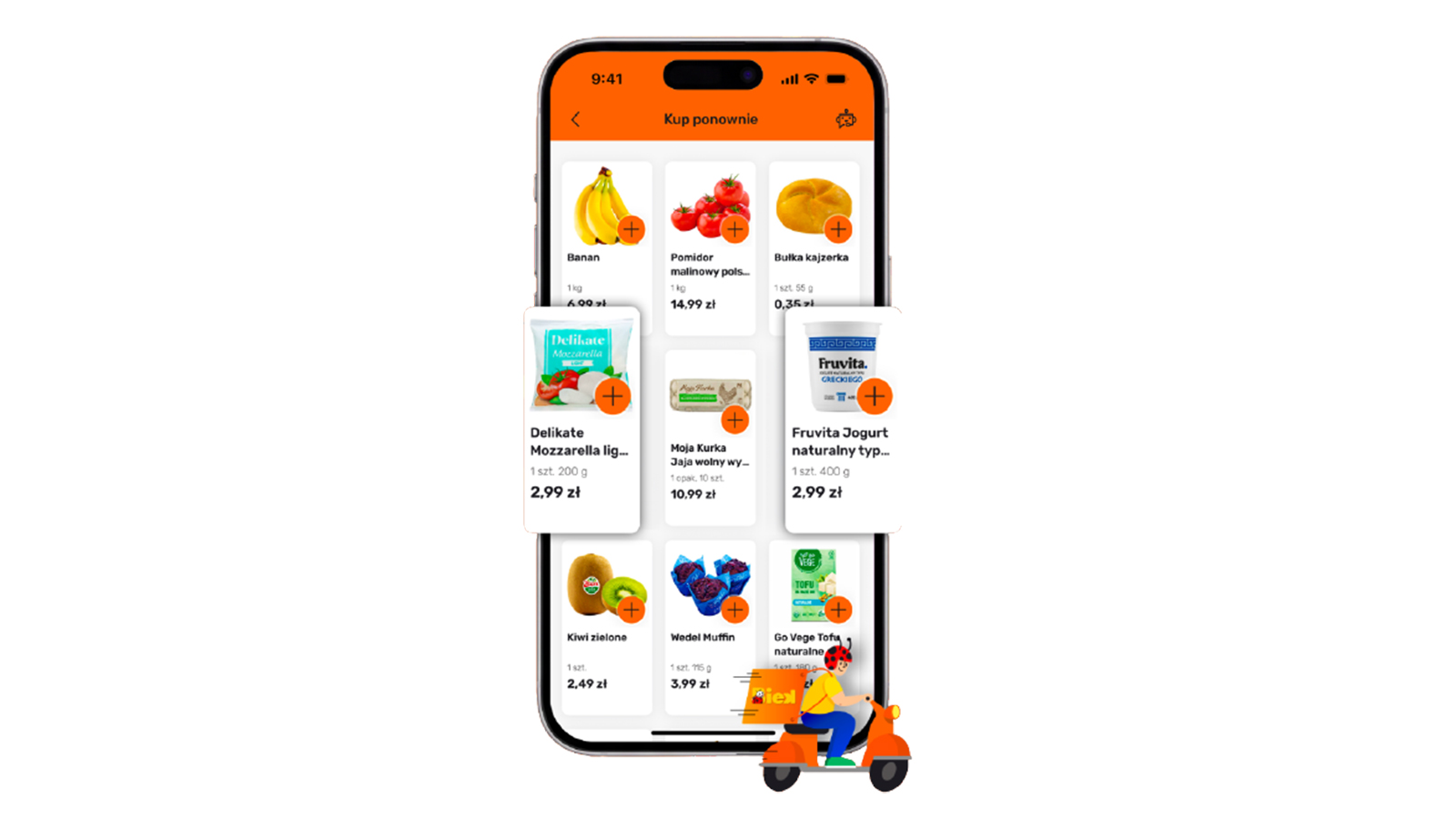
Retailers in Poland are combatting these difficulties with an innovative work-around: launching their own quick commerce apps (in addition to existing partnerships). Zabka, a leader in digital innovation, piloted its Jush app as early as 2021. This week, market leader Biedronka has launched Biek, a dedicated app for online and quick commerce delivery. These allow retailers to take advantage of quick commerce whilst enhancing shoppers’ experience and preserving vital point of sale data.
The challenge of platform partnerships
Most retailers implement rapid delivery through partnerships with platform operators. In Poland, Glovo alone is partnered with five of the ten largest retailers in the market. However, many such partnerships struggle to deliver profits for retailers. The high cost of last-mile delivery, even when executed by a logistics partner, can squeeze already-tight margins too much to be profitable.
Another risk here is that many quick commerce platforms offer their own grocery ranges. Wolt, for example, offers its own Wolt Market range, sourced directly from suppliers and wholesalers, despite being partnered with several major retailers. Many platforms prioritise their native offerings in-app, creating an uneven competition for physical retailers.
Native rapid delivery apps
Neither Zabka nor Biedronka operates the delivery services within their quick commerce apps. The use of logistics partners and the continuing high cost of last mile delivery mean that native apps are not inherently more profitable than quick commerce partners. They do, however, allow retailers to take advantage of synergies with their existing operations and better enhance customers’ experience.
Both retailers link their digital loyalty schemes with their native quick commerce apps. This omni-channel integration helps to deliver value and build loyalty, whilst keeping shoppers within a retailer’s ecosystem. Zabka takes this a step further, using its advanced digital capabilities to enhance its Jush app. It recently launched an AI-powered feature which can generate a shopping basket from an image of an empty fridge.
Power of the point of sale
The most important benefit of native quick commerce apps is ownership of the point of sale. When partner platforms are used, retailers miss out on vital insights on shopper choices. Not only do native apps allow retailers to reclaim this, but linkage to digital loyalty can track shopper trends across physical, online, and quick commerce touchpoints.
This data will also improve Zabka and Biedronka’s retail media capabilities. Both retailers are investing in building targeted digital retail media networks. The use of quick commerce insights can greatly improve this targeting across channels. These native apps will also provide another key touchpoint for these campaigns. The revenue brought in by these enhanced retail media capabilities can assist in improving the profitability of quick commerce operations.
Driving loyalty and insights
Retailers’ own quick commerce apps provide clear benefits over partner platforms. Shoppers are kept within an ecosystem, pushed towards loyalty schemes rather than competitors’ offers. They can also combine with existing capabilities to effectively enhance customers’ experience. Crucially, they provide vital point of sale data.
It is yet to be seen if these apps will be able to compete in an increasingly fragmented and saturated quick commerce market. They also do not address the core issue of profitability. However, in a space that already presents challenges to retailers, native apps may prove a powerful tool for retaining and gaining insight on shoppers.