
Find out which shoppers celebrated Diwali this year.
Diwali does not yet benefit from mass shopper engagement, but there is an opportunity to tailor activations to households with young children in future years, as they are most likely to celebrate.
Diwali does not benefit from mass engagement
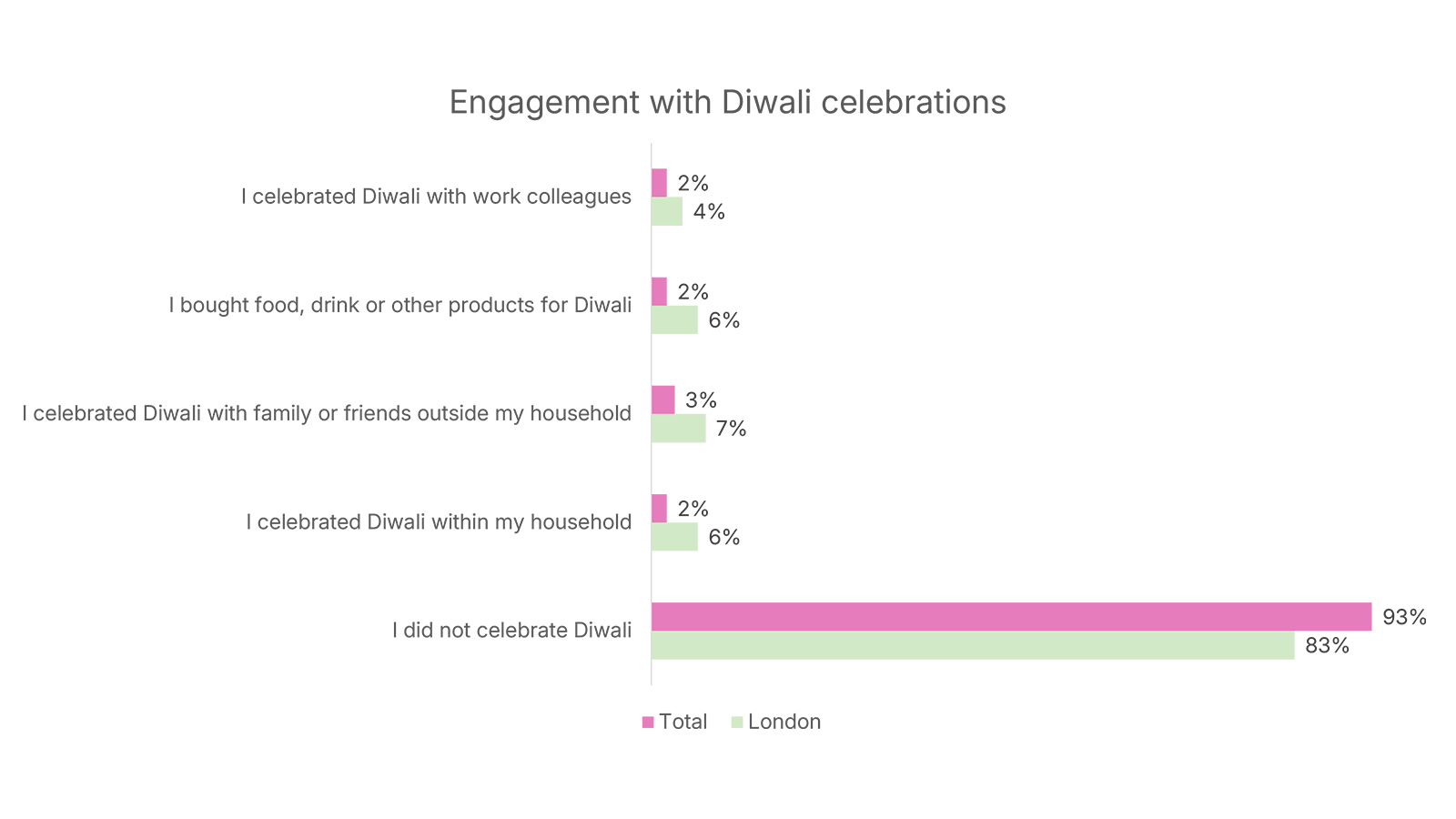
Diwali did not experience mass shopper engagement in 2026, as over 90% of shoppers did not celebrate the event at all.
That said, celebrations were more common among London shoppers, as 17% of shoppers in the region celebrated the event in some form. This reflects a greater level of diversity within the Capital, compared with other regions throughout the UK.
Parents of young children over index in event celebrations
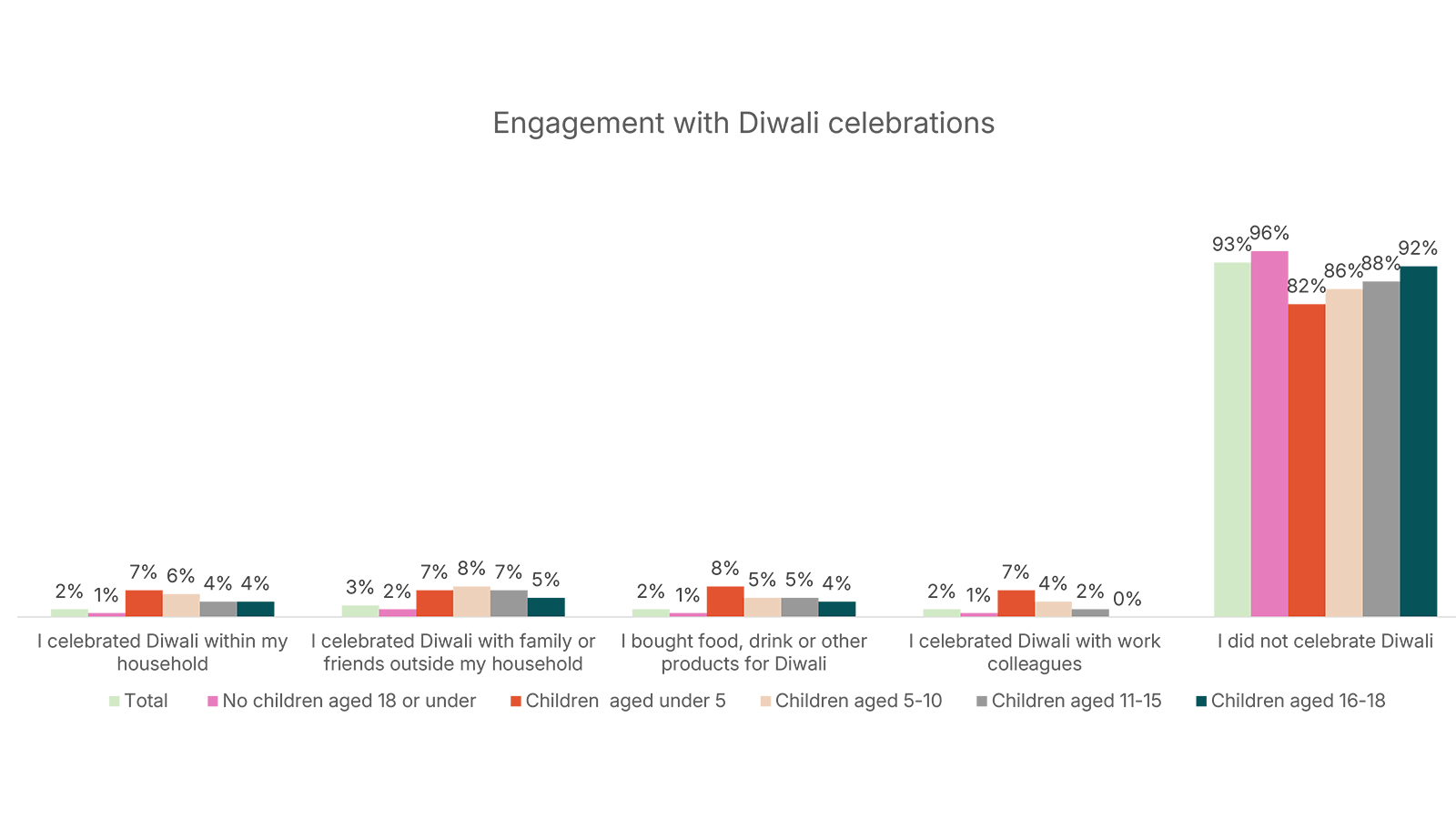
Similarly to Halloween 2026, parents of young children were the most engaged in terms of the festivities, as 18% of parents with children under 5 marked the event in some way.
This was also the demographic that was most engaged in terms of spend activity, as 8% claimed that they bought food, drink or other products to celebrate the event (compared with just 2% overall).
For retailers and brands, this signals an opportunity to target young families in terms of generating event spend. For example, this year Tesco launched its Vandan All-in-One Puja Box across 50 stores. Priced at £12.75, the box was designed to create a Puja experience at-home, offering a means for children to learn about the traditions behind Diwali in an accessible way.
Celebrations venture out-of-household
Interestingly, celebrations beyond the immediate household slightly over indexed this year. This was particularly the case among younger generations, as 8% of respondents aged 18-24 claimed to celebrate with family or friends outside of their household.
Such celebrations were likely further encouraged by the fact that the event fell on a Sunday this year, landing on the 8th November, with this encouraging more social occasions. Whereas, last year, the event took place on Monday 20th October. Google Trends Data indicates that in the two weeks surrounding Diwali, Google searches in the UK for ‘Diwali event’ increased by 7.8% year-on-year, with this likely supported by increased event focus, combined with the weekend timing this year.
Diwali 2027: key opportunities
Looking ahead to next year, the event is set to fall on Friday 29th October, meaning it will land on Halloween weekend. Whilst the two events are very different, for stores with less space, shelf capacity will inevitably be limited, meaning that strategic thinking will be needed to ensure retailers maximise on both occasions.
Retailers can take learnings from this Diwali, which landed on the same week as fireworks night, which fell a few days prior on Thursday 5th November, but with celebrations continuing into the weekend.
Here are some photos from our research to show how retailers navigated simultaneous seasonal occasions in-store this year…
Additionally, given the fact that parents of young children over index in terms of engagement and the fact that Diwali will fall within October half term, grocers can activate to maximise on the event. For example, investment in NPD designed to cater for occasions like child-friendly, at-home Diwali parties or products which allow children to engage in Diwali Arts & Crafts at home, will resonate.