
Health AI is moving beyond advice and starting to influence what ends up in the basket. Do you know the agents helping shape your shoppers' health decisions?
From advice to action
The industry has spent years making food healthier and helping shoppers compare products. Now AI can assess the food, understand the person buying it and recommend what comes next.
These assistants already have many different names. ZOE has Ziggie, its AI nutrition coach. Carrefour has Hopla, which guides shoppers towards healthier choices. Instacart has Clementine, which can build a grocery basket from a conversation. In China, Ant Group's AQ connects health goals and personal data with advice at the supermarket shelf.
While there are different models, there’s a consistent direction of travel, with AI moving closer to the moment of choice.
ZOE: personal insight without the friction
ZOE 2.0 removes much of the effort from personalised nutrition. Instead of cookies, blood tests, a continuous glucose monitor and a stool sample, it can now predict blood glucose and blood-fat responses using health questions and existing data (microbiome testing remains optional).
Users can also photograph a meal or product, receive a personalised score and ask Ziggie what it means for their health.
This shifts personalised nutrition closer towards everyday food-intelligence service, rather than a high-friction testing experience.
Hopla: healthier prompts while shopping
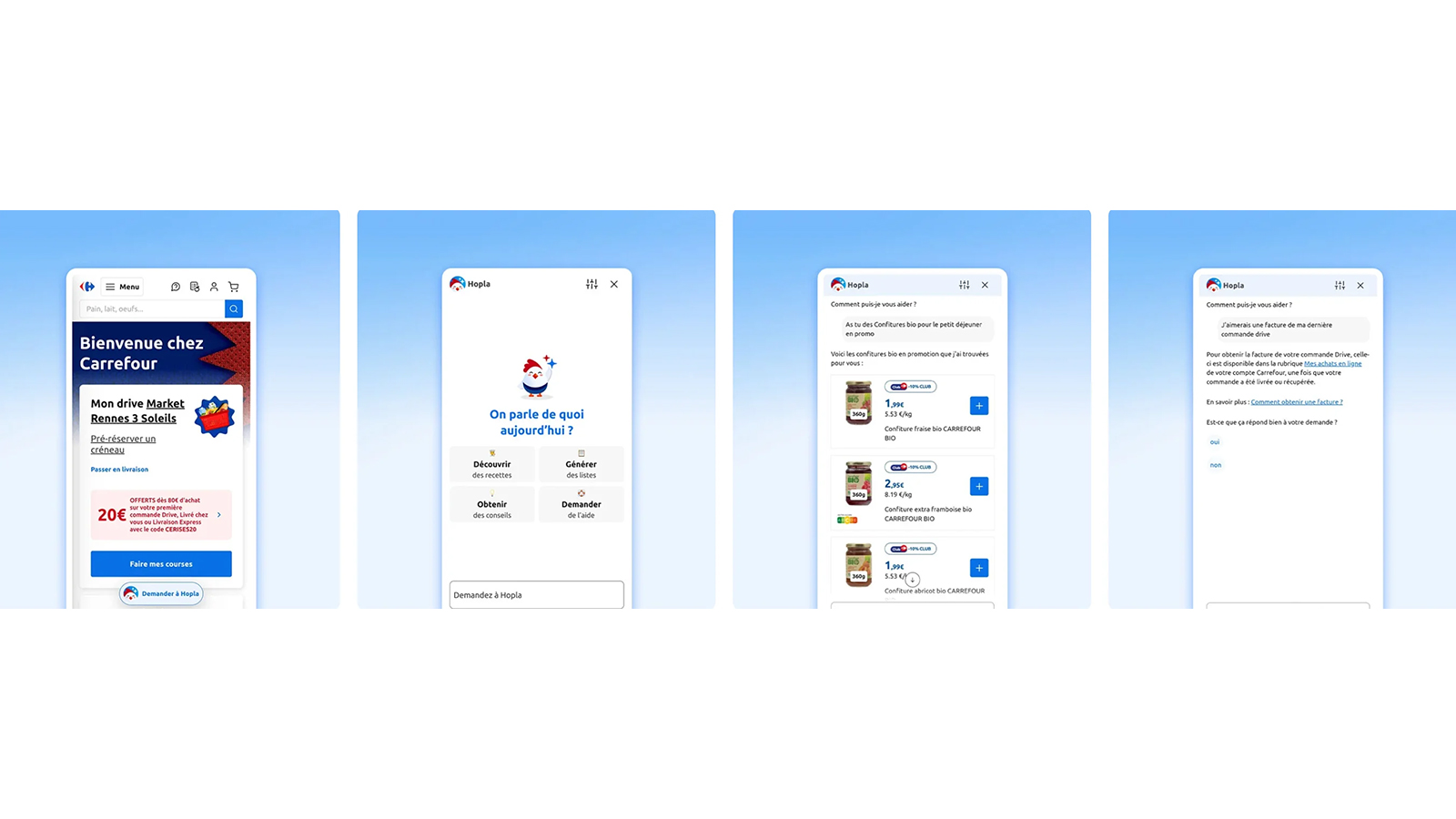
Carrefour's Hopla brings health guidance into the shopping journey. When a shopper searches for a product, it proactively surfaces lower-sugar, plant-based or protein-enriched alternatives. It can also analyse the completed basket and suggest a better balance.
That is an important step: the AI is no longer just helping shoppers find what they already want. It is beginning to influence the choice itself.
Instacart: from recommendation to agentic basket
Instacart takes that a step further. Its Smart Shop system uses AI to personalise discovery around shopping habits and dietary preferences. Its Health Tags add nutritional and dietary attributes across the catalogue, helping shoppers identify products that fit goals such as higher protein or fibre, or lower sugar and sodium.
Its newest development, Clementine, launched on the Instacart Marketplace in the US and Canada in September 2026. The agentic shopping assistant can take a request such as “high-protein, easy dinners for two” and turn it into a ready-to-buy basket, drawing on household preferences, previous shopping behaviour, budget and live availability at the selected store.
Instacart is making this intelligence available beyond its own marketplace. Its broader grocery infrastructure can connect AI shopping journeys from ChatGPT, Claude, Gemini and other AI environments to an online grocery basket. Separately, its Cart Assistant can bring conversational shopping into retailers' own websites and apps.
AQ: health AI at the physical shelf
Ant Group’s AI health assistant AQ operates across health management, medical services, weight management and everyday behaviour. It is already used by more than 150 million people in China.
Ant is also deepening AQ’s expertise. In July 2026, it became Boohee Health’s largest external shareholder, adding nearly 20 years of experience in weight management, nutrition and chronic disease prevention, as well as access to more than 200 million registered users. Together, they will initially focus on weight management, dietary tracking and behavioural intervention, taking AQ beyond answers towards ongoing health coaching.
That relationship is now moving into more than 2,000 supermarkets, including Hema, Wumart and Olé. Dedicated AQ health zones organise products around quality carbohydrates, protein and fats, with AI nutrition labels and goal-based advice. Shoppers can also ask AQ what an individual food means for their health.
Not every market will move at the same speed
PwC’s 2026 Voice of the Consumer survey found that, among people who use AI tools, around a third in the UK, Germany and US turn to them first for health and wellness information. This rises to at least 61% across the Asian markets surveyed and 75% in the surveyed Middle Eastern markets. Yet globally, only 18% rank AI among the sources that most influence the actions they take to improve their health, behind health professionals, personal curiosity, friends and family. That suggests the opportunity is not necessarily about handing over the decision. Consumers may be more willing to let AI shape a choice than make it for them.
Who shapes the healthier choice?
For retailers, Health AI could make guidance more personal and useful, helping shoppers navigate products against their own goals rather than generic definitions of healthy. But it is also a control-point question. If AI becomes the layer that translates health goals into baskets, retailers must decide whether to power it, partner with it or risk being reduced to fulfilment.
For suppliers, AI raises the bar for proof. If algorithms increasingly shape healthier choices, products will need clear evidence showing how they support specific needs, from protein and fibre to blood sugar, gut health or weight management. If AI owns the recommendation, suppliers own the credibility behind it.